
THE FEATURED READDomain Names
How to Use Your Domain as Your Bluesky Handle
Set your domain as your Bluesky handle by adding an _atproto TXT record in NameSilo DNS and verifying your account.
 A clearer path to your next move.
Practical know-how for whatever comes next. From your first domain to your next big thing.
Set your domain as your Bluesky handle by adding an _atproto TXT record in NameSilo DNS and verifying your account.
A clearer path to your next move.A little insight goes a long way. Find your next good read.
Set your domain as your Bluesky handle by adding an _atproto TXT record in NameSilo DNS and verifying your account.

.io still works today. Learn how the Chagos agreement could affect the extension, what ICANN’s ccTLD retirement policy says, and how to prepare.

Learn how ICANN’s EBERO program keeps critical domain registry functions running when a new gTLD operator fails or exits.
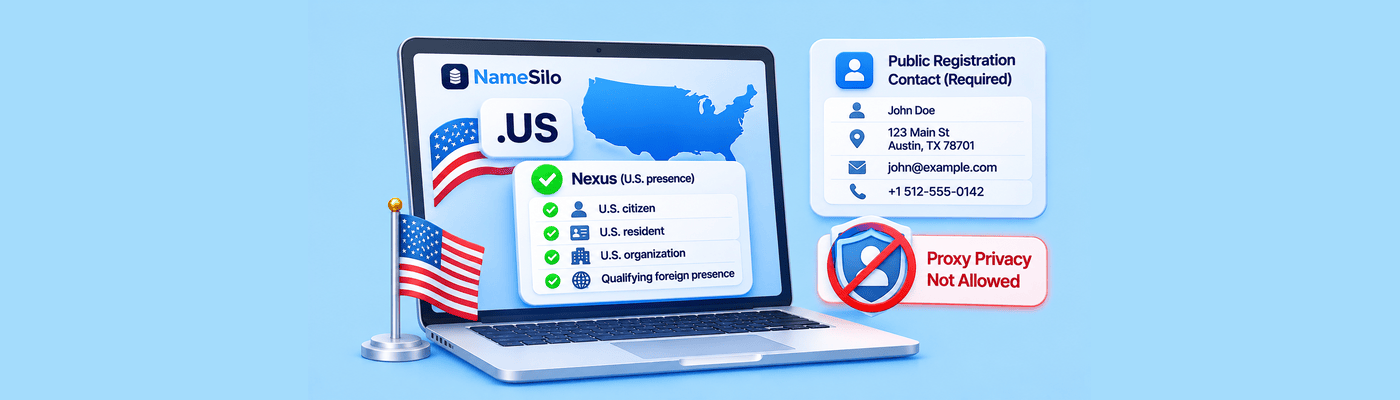
Learn who can register a .us domain, how Nexus requirements work, why WHOIS privacy is prohibited, and what happens if eligibility fails.

Learn how DPML, AdultBlock and GlobalBlock protect brands across hundreds of domain extensions and when defensive registration still makes sense.

Set up Domain Defender challenge questions to protect domain changes, transfers, nameservers, and contacts even after someone gains account access.

Learn how to change PHP versions in cPanel, enable extensions like zip and mbstring, test compatibility, and roll back safely if a site breaks.

Learn how to create Titan email aliases, receive mail at addresses like support@, send from an alias where supported, and manage up to 10 per mailbox.

Fix SMTP 550 spam rejections by checking SPF, DKIM, message links, blocklists, attachments, and sender reputation before sending again.

Learn what CPU, memory, Entry Processes, I/O, and IOPS mean in cPanel Resource Usage and how to identify what is slowing your website.

Learn why many domains can only be registered up to 10 years ahead, how rolling renewals work, and why “100-year domains” are not 100-year registry terms.
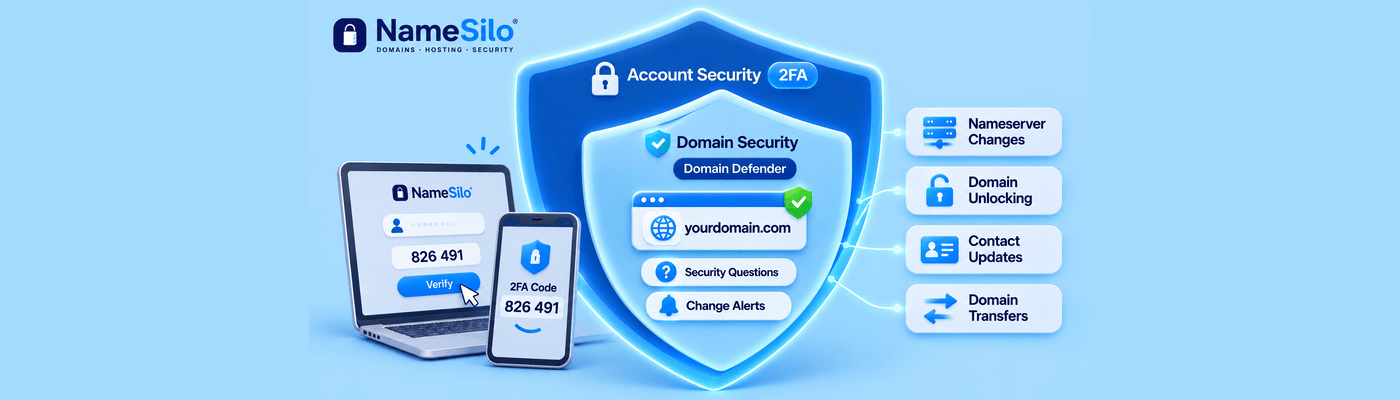
Learn how NameSilo 2FA protects account login while Domain Defender adds action-level protection for domain changes, transfers, and nameservers.