Load Balancing Myths: When More Servers Don’t Mean Better Performance

Load balancing is often described as the cure for performance issues in web hosting. The logic seems simple: distribute traffic across more servers, reduce strain, and achieve faster, more reliable results. But the reality is more complex. In 2025, businesses are discovering that adding more servers does not always translate to better performance. In fact, without strategic planning, it can create new inefficiencies and vulnerabilities.
The myths surrounding load balancing stem from oversimplification. While distributing workloads is essential for scalability, effectiveness depends on architecture, configuration, and monitoring. More servers alone are not enough, what matters is how they are managed.
The Appeal of More Servers
At first glance, scaling infrastructure by adding servers appears logical. If one server struggles, multiple servers should collectively perform better. Hosting providers and IT teams often promote this approach as a straightforward solution to growing traffic demands.
The appeal lies in its simplicity. Businesses see additional servers as insurance against downtime and as a way to future-proof operations. Yet the assumption that more is always better overlooks the complexity of balancing resources effectively.
Where Load Balancing Falls Short
Load balancing can fail to deliver if underlying issues are not addressed. Poorly optimized applications, inefficient queries, or misconfigured caching will not perform better simply because traffic is distributed. Instead, inefficiencies are replicated across servers, compounding the problem.
Another challenge is latency. Adding servers in distant regions may expand reach but increase response times if routing is not carefully managed. Without intelligent balancing, users may experience slower service despite the presence of more infrastructure.
Mismanagement of balancing algorithms can also create uneven loads. Some servers may be overworked while others sit idle, undermining the very goal of distribution. In these cases, more servers may actually reduce performance consistency.
The Hidden Costs of Over-Scaling
Beyond technical limitations, over-scaling carries financial and environmental costs. Additional servers increase expenses for hardware, energy, and maintenance. They also raise the carbon footprint of digital operations, contradicting sustainability goals. Businesses that scale without strategy risk wasting resources while achieving little improvement.
Over-reliance on infrastructure also creates a false sense of security. Organizations may neglect optimization, assuming that server quantity will mask inefficiencies. This mindset not only undermines performance but also erodes operational discipline.
Strategy Over Quantity
The real key to effective load balancing is strategy. Intelligent distribution relies on algorithms that adapt to traffic patterns, prioritize proximity, and adjust in real time. Combining load balancing with optimization techniques, such as caching, database tuning, and content delivery networks, delivers better results than servers alone.
Monitoring is equally critical. Continuous visibility into traffic, server performance, and user behavior ensures that balancing decisions remain effective. Without monitoring, businesses cannot identify bottlenecks or adapt to changing demands.
The Role of Automation and AI
In 2025, automation and AI are reshaping load balancing. Machine learning algorithms analyze patterns to predict traffic spikes and allocate resources dynamically. This predictive balancing reduces latency, improves reliability, and ensures that additional servers are used efficiently.
AI-driven systems also highlight the fallacy of “more equals better.” By showing how optimization outperforms raw scaling, they encourage businesses to invest in smarter rather than larger infrastructures.
Debunking the Myth
Load balancing is essential for modern web hosting, but its effectiveness is not measured in server counts. More servers do not guarantee better performance; strategy, optimization, and intelligent management do. Businesses that treat load balancing as a discipline rather than a numbers game will achieve faster, more reliable, and more sustainable outcomes.
In 2025, debunking the myth of “more equals better” is crucial. Hosting success lies in precision, not excess, and in leveraging technology to ensure efficiency rather than assuming size alone delivers results.
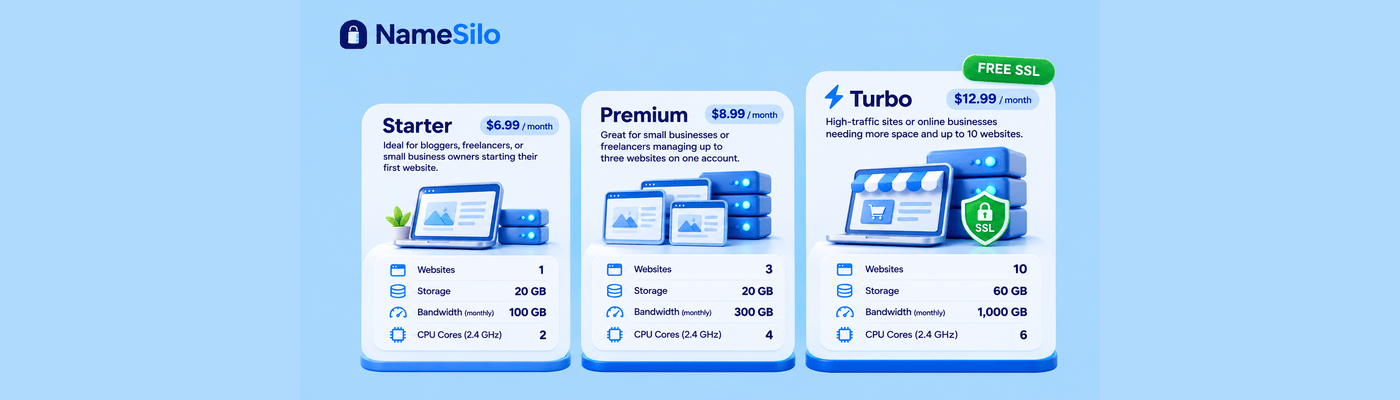
At NameSilo, we provide hosting solutions designed for efficiency. Our infrastructure combines intelligent load balancing with optimization strategies to deliver performance that scales sustainably.
NameSilo Staff
The NameSilo staff of writers worked together on this post. It was a combination of efforts from our passionate writers that produce content to educate and provide insights for all our readers.