Does Your Hosting Pass the UX Test? What Users Feel Before a Page Even Loads

First Impressions Happen Before First Paint
Before a single pixel loads, your hosting setup has already made an impression. In 2025, user experience (UX) begins the moment someone types your URL or taps a link. The time it takes to resolve the domain, establish a secure connection, and start loading the page creates an immediate perception, consciously or not.
Hosting is no longer just about uptime or storage. It's about trust, intent, and performance signals. If your infrastructure creates even a hint of friction, users may bounce before your beautiful homepage ever gets a chance to appear.
In this article, we explore how shared hosting, when configured right, can pass the modern UX test and help build a foundation of user trust from the very first interaction.
The Invisible Layer of UX: Perception Before Pixels
Long before visitors see your brand colors or scroll your content, they experience the feel of your site through subtle technical cues:
- Time to connect: Is there a delay after the link is clicked?
- SSL handshake: Is the site marked secure or flagged as unsafe?
- DNS resolution: Does the site open smoothly, or stall mid-request?
- Browser preloading behavior: Are fonts and assets prioritized, or blocked?
These micro-experiences shape what users assume about your site’s credibility, speed, and professionalism.
Shared Hosting Can Deliver a Great First Impression
While it’s easy to assume these performance nuances require a VPS or cloud setup, the truth is that modern shared hosting can perform beautifully if you choose the right provider and configuration:
- CDN integration speeds up asset delivery regardless of location
- Server-side caching reduces response times dramatically
- Free SSL certificates ensure instant trust with browsers and users
- Stable DNS with low latency makes domain resolution seamless
What AI and Search Engines Now Expect
Search engines don’t just index your content, they model user experience:
- Core Web Vitals measure perceived performance, not just raw load times
- Trust signals include DNSSEC, SSL, and consistent uptime
- Behavioral metrics like bounce rate and dwell time start with how quickly a page begins to load
This means UX starts with infrastructure. If your hosting causes lags, errors, or trust warnings, AI systems will associate your site with friction.
Real Users Feel Latency Instinctively
Speed is relative. A half-second delay might not matter on paper, but it can trigger a psychological reaction:
- A slow SSL handshake feels risky
- A stalled blank screen feels broken
- A choppy domain redirect feels sketchy
People may not understand what’s wrong, but they will sense it. And in a competitive digital space, that perception is everything.
DNS and SSL: The First UX Checkpoints
Your site’s domain and certificate setup are among the first processes users encounter:
- DNSSEC prevents spoofing and ensures legitimacy
- SSL secures user data and removes browser warnings
- Reliable nameservers reduce the chance of delays or downtime
When these systems are configured properly, visitors experience a smooth, secure entry. When they’re not, trust erodes instantly.
Why Hosting Configuration Affects User Emotion
Even before content loads, users begin evaluating:
- Is this site fast?
- Is it safe?
- Is it worth waiting for?
This emotional equation happens in milliseconds. Hosting that supports preloading, SSL, DNS speed, and uptime makes your site feel fast, safe, and intentional, even before a headline is visible.
The Role of Shared Hosting in UX-Driven SEO
Shared hosting doesn’t mean "cheap." It means "shared infrastructure." With the right optimization, it can:
- Pass Core Web Vitals audits
- Deliver stable user experience metrics
- Support SEO through speed, uptime, and trust signals
If your host provides smart caching, modern protocols (like HTTP/3), and solid DNS tools, shared hosting is more than capable of creating a smooth UX.
Final Thought: UX Begins Where Hosting Begins
In 2025, first impressions aren’t made by design alone. They're made by your server response time, your DNS handshake, and your SSL configuration.
A well-structured shared hosting plan doesn’t just load your website. It shapes how users feel about it.
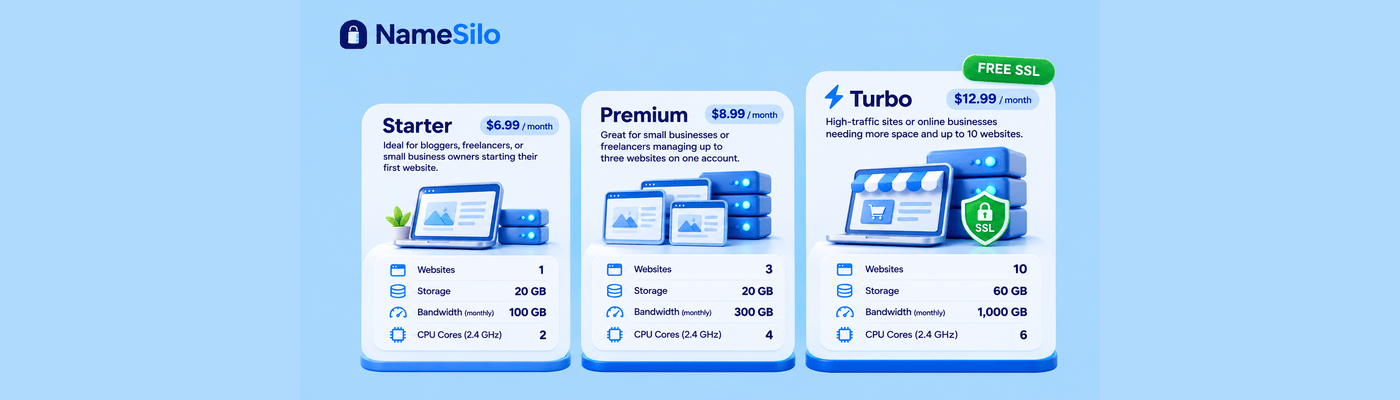
And when you host with NameSilo, you're not just meeting expectations. You're starting ahead.
NameSilo Staff
The NameSilo staff of writers worked together on this post. It was a combination of efforts from our passionate writers that produce content to educate and provide insights for all our readers.