Are We Too Reliant on CDNs? What Hosting Still Brings to the Table

Content Delivery Networks (CDNs) have become so common in modern web architecture that many businesses now treat them as default. By distributing cached versions of content across global servers, CDNs reduce latency, accelerate page loads, and shield against spikes in traffic. But in 2025, as reliance on CDNs grows, it’s worth asking: are we leaning too heavily on them? What role does hosting still play in performance and reliability?
The answer reveals an important truth. CDNs are accelerators, not foundations. They can’t replace the core infrastructure of reliable hosting, nor can they solve every performance challenge. To understand the balance, businesses must separate what CDNs do well from what only hosting can provide.
What CDNs Do Well
CDNs excel at reducing the distance between users and content. By caching files across multiple edge locations, they cut down the physical time it takes for data to travel. This improves user experience, especially for media-heavy or globally accessed sites.
They also act as buffers. During traffic surges, CDNs absorb much of the demand, preventing origin servers from being overwhelmed. In many cases, they even provide added layers of security through DDoS mitigation and traffic filtering.
These strengths make CDNs essential tools in modern infrastructure. But essential doesn’t mean sufficient.
The Limits of CDN Reliance
CDNs are only as strong as the origin servers behind them. They can’t fix slow or unstable hosting environments. If the base server struggles with poor performance, outdated configurations, or weak security, the CDN merely masks the problem temporarily.
Reliance on CDNs also introduces risk. Outages at large CDN providers can ripple across thousands of businesses simultaneously. While rare, these incidents remind us that over-reliance on any single layer of infrastructure is risky.
Most importantly, CDNs don’t replace dynamic hosting. Cached content is static by nature. For real-time data, transactions, or personalized experiences, the request must still reach the origin server. If that server isn’t reliable, the entire experience falters.
Hosting’s Ongoing Role
Hosting remains the foundation of the web. It provides the environment where applications run, databases operate, and dynamic interactions occur. Reliable hosting ensures uptime, secures data, and supports the core logic of websites and applications.
Unlike CDNs, hosting handles the heavy lifting of computation, storage, and complex processes. It also sets the baseline for performance. A strong hosting setup ensures that even when CDN layers fail or are bypassed, the brand still delivers a dependable experience.
Striking the Right Balance
The real challenge isn’t choosing between CDNs and hosting, it’s knowing how to balance them. CDNs should be seen as complements, not substitutes. They amplify performance and resilience, but they cannot replace the fundamentals of strong hosting architecture.
Businesses that invest in both layers create redundancy and reliability. Hosting provides the foundation, while CDNs extend reach and accelerate delivery. Together, they form a balanced strategy that protects against both local failures and global demands.
Beyond Acceleration
In 2025, CDNs are indispensable, but they are not the entire solution. Hosting still brings stability, reliability, and the capacity to power the dynamic backbone of the web. Over-reliance on CDNs risks neglecting the core infrastructure that keeps businesses online.
The future belongs to brands that treat CDNs as accelerators and hosting as foundations. When both work together, the result is not only faster performance but also stronger trust and resilience.
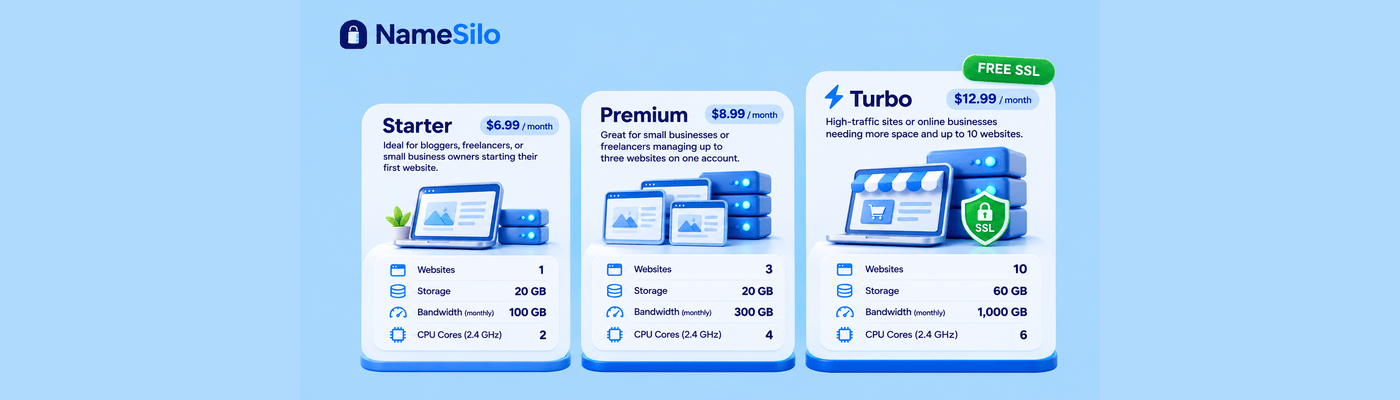
At NameSilo, we provide hosting solutions designed to pair seamlessly with CDNs. Whether you’re scaling globally or running a local site, we help you build infrastructure that’s fast, resilient, and balanced.
NameSilo Staff
The NameSilo staff of writers worked together on this post. It was a combination of efforts from our passionate writers that produce content to educate and provide insights for all our readers.