
Domain Name Search3 min
Does WHOIS Privacy Protect You From UDRP Trademark Disputes?
NS
NameSilo Staff10/14/2026
Share
This article is for educational purposes only and does not constitute legal advice. Consult a qualified attorney regarding any specific domain dispute.
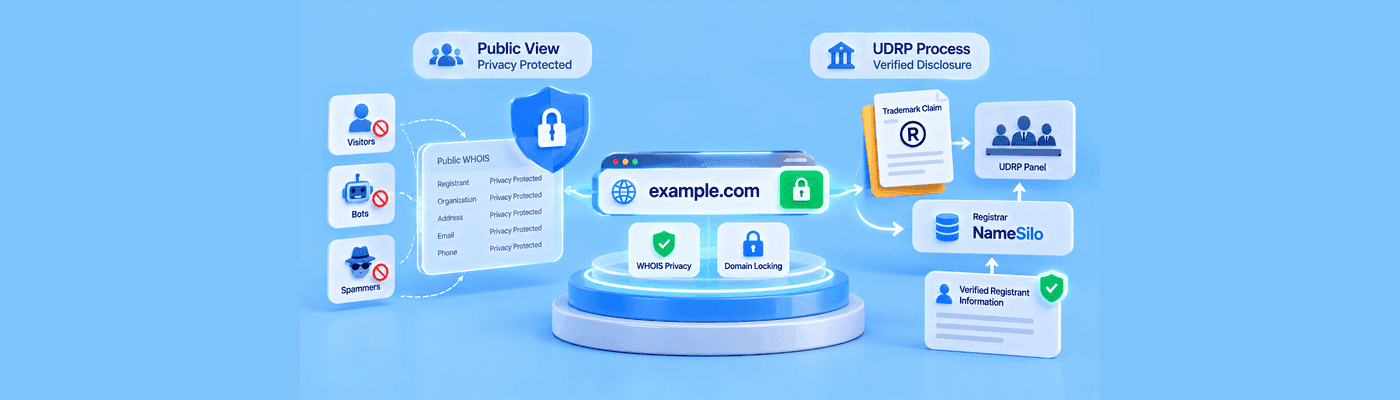
No, WHOIS privacy protection does not protect you from UDRP trademark disputes. If a trademark holder files a formal UDRP complaint, ICANN rules require the domain registrar to lift the privacy shield and reveal the underlying registrant's true identity to the legal arbitration panel.
Two Different Tools, Two Different Purposes
WHOIS Privacy exists to stop automated scrapers, spammers, and casual snoops from harvesting your public contact information. UDRP exists for something entirely different: resolving legitimate legal claims that a domain infringes someone's trademark rights. One is a shield against nuisance. The other is a formal legal process, and privacy settings were never designed to obstruct it.
Why It Matters: The "Invisible Shield" Myth
Some registrants genuinely believe enabling privacy makes them untraceable, that a trademark holder's lawyers simply hit a dead end at "REDACTED FOR PRIVACY" and give up. This is false, and believing it leads people into registering domains they'd never touch if they understood how quickly that shield comes down once a real legal complaint is filed.
The "Lifting the Veil" Process
WIPO's own current UDRP rules spell this out precisely. Once a complaint is filed, the registrar has two business days to confirm a lock on the domain and provide the verification data the UDRP provider requests. Critically, any privacy protection must be resolved within that same two-day window, the underlying registrant information gets disclosed to the arbitration provider before or as part of confirming that lock. The panel sees your real identity from very early in the process, not after some drawn-out legal battle.
The "Cyberflight" Principle
Cyberflight is the formal term for attempting to transfer a domain to a new registrant or registrar specifically to dodge or delay a UDRP proceeding after learning about it. Current UDRP rules close this door entirely: once a complaint triggers a lock, the registrant and registrar information cannot be modified for the remaining duration of the case. Attempting cyberflight isn't just ineffective, panels have repeatedly treated the attempt itself as additional evidence of bad faith. Complainants also aren't required to notify you directly when filing anymore, specifically to prevent this. Most respondents first learn about a case from the UDRP provider itself, by which point the lock and disclosure have typically already happened.
Common Mistakes
Hiding behind privacy and ignoring the notice entirely: The UDRP complaint still reaches you, forwarded through your registrar to whatever email is on file. Ignoring it because you assume privacy means you're untraceable doesn't stop the case, it just guarantees the panel decides without hearing your side, typically resulting in an automatic transfer by default.
What This Means for You
NameSilo's WHOIS Privacy protects your contact details from public display while operating in full compliance with ICANN's dispute resolution requirements, your registration data remains available to legitimate legal proceedings exactly as UDRP rules require. Considering a domain purchase? Search available names to check what's actually available.
Frequently Asked Questions
Does WHOIS privacy stop a UDRP complaint?
No, registration data is disclosed to the panel within two business days of filing.
Can a registrar reveal my private WHOIS data?
Yes, when legally required by a UDRP proceeding or valid court order.
What happens if a UDRP is filed against a private domain?
The domain is locked and underlying registrant data is disclosed to the panel.
What is cyberflight in domain disputes?
Attempting to transfer a domain to dodge a UDRP case, now blocked by locking rules.
Is cybersquatting illegal if I use domain privacy?
Yes, privacy settings have no bearing on the underlying legal violation.
How do trademark lawyers find domain owners?
Through the UDRP process itself, which compels registrar disclosure directly.
Can I ignore a UDRP notice sent to a proxy email?
No, ignoring it typically results in an automatic default transfer against you.
How does NameSilo handle WHOIS privacy during disputes?
Privacy protects public display only, registration data remains available to valid proceedings.

NameSilo StaffThe NameSilo staff of writers worked together on this post. It was a combination of efforts from our passionate writers that produce content to educate and provide insights for all our readers.
More articleswritten by NameSilo