Chrome Now Asks Before Opening HTTP Sites: What Your Domain Needs
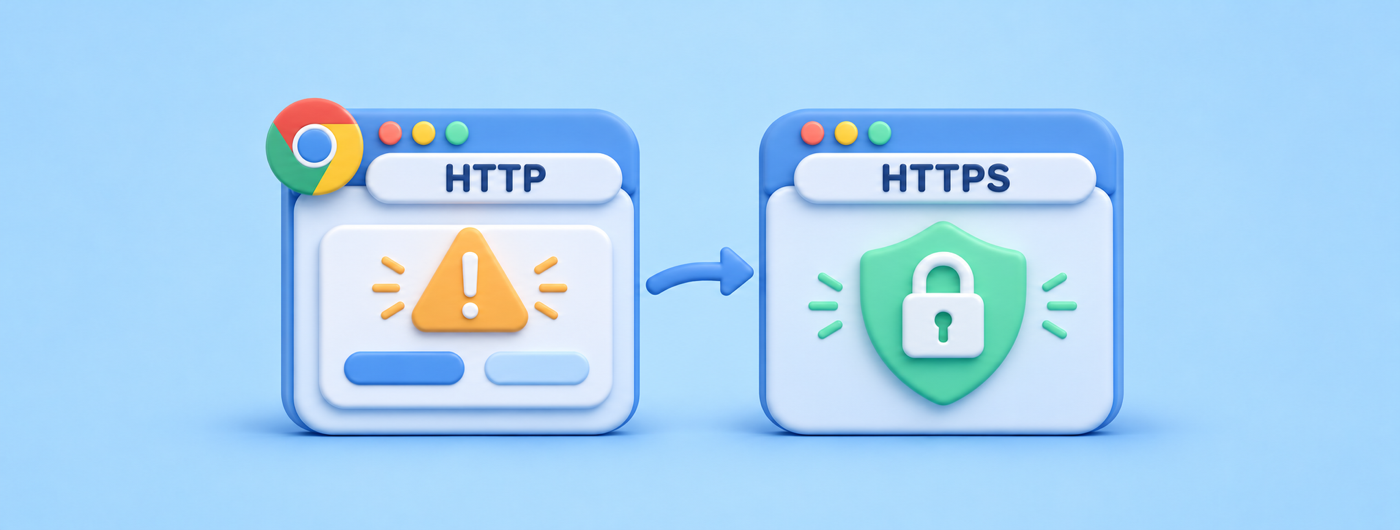
Starting with Chrome 154 in October 2026, Chrome asks for permission before opening a public website that only loads over HTTP. Sites with a valid SSL certificate are unaffected. If your site is on NameSilo Turbo hosting, AutoSSL covers it automatically. For other setups, install a certificate and redirect HTTP to HTTPS.
What Does "Always Use Secure Connections" Do?
Chrome tries HTTPS first for every connection. If a public site only offers HTTP, Chrome shows a warning that visitors can bypass and asks before loading the page. This is different from the "Not Secure" label, which Chrome shows in the address bar once an HTTP page has loaded. Our guide to fixing the Not Secure warning covers that label.
The Rollout
Chrome version | When | Who gets it |
Chrome 147 | April 2026 | Users of Enhanced Safe Browsing |
Chrome 154 | October 2026 | Everyone, on public sites |
Chrome prompts before the first visit to a public HTTP site. It does not repeat the prompt on every visit to sites someone uses often. Private addresses, single-label hostnames and intranet names are excluded.
Who Is Affected?
Sites without a certificate.
Sites with an expired certificate. Visitors see a warning instead of your page.
Hostnames the certificate does not cover. A certificate for the bare domain does not protect www, and the reverse is also true.
Fixing It on NameSilo Hosting
Let AutoSSL do the work. On Turbo hosting, AutoSSL issues and renews certificates for your domains automatically.
Force the HTTPS redirect. Confirm that https://yourdomain.com loads, then turn on Force HTTPS Redirect in cPanel. Our guide to forcing an HTTPS redirect shows how.
Check both hostnames. The bare domain and www should both be covered and redirected.
Consider a paid certificate. On other hosting setups, NameSilo offers Positive SSL (9.59 peryear),EssentialSSL(15.00 per year) and Extended Validation SSL ($99.99 per year). See our SSL certificates page.
A paid SSL plan is valid for one year, but because of updated industry requirements, the certificate itself needs to be reissued and revalidated about every 6 months. Your one-year purchase still covers the full year, and no additional certificate purchase is required for the second issuance. When it is time for reissue, contact us and we will assist you with the process.
Quick Check Table
Symptom | Cause | Fix |
Prompt on the bare domain only | The certificate covers www but not the bare domain | Reissue it to cover both, then redirect both |
Prompt after a recent change | The redirect or certificate was lost in a move or update | Reinstall the certificate and turn the redirect back on |
Page still flagged after SSL | Mixed content, meaning HTTP images or scripts on an HTTPS page | Change those links to https:// |
Warning on a certificate that worked | The certificate expired | Renew or reissue it |
What This Means for You
If your site loads over HTTPS with a valid certificate on every hostname, visitors see nothing new. Check both versions of your domain, confirm your redirect, and keep your certificate current.
Frequently Asked Questions
Why does Chrome ask before opening my website? Chrome could not load it over HTTPS, so it asks before using plain HTTP.
What is Always Use Secure Connections in Chrome? A setting that tries HTTPS first and asks before loading a public site that only offers HTTP.
When did Chrome turn on HTTPS by default? In April 2026 with Chrome 147 for Enhanced Safe Browsing users, and in October 2026 with Chrome 154 for everyone.
Does Chrome block HTTP websites? No. It shows a warning that visitors can bypass.
How do I stop Chrome warning visitors about my site? Install a valid certificate, cover both www and the bare domain, and redirect HTTP to HTTPS.
Does NameSilo hosting include SSL? Turbo hosting includes free SSL through AutoSSL. On other setups, you can purchase a certificate.
Do I need SSL for both www and non-www? Yes. Your certificate should cover both hostnames.
Does this affect internal or local sites? No. Private addresses, single-label hostnames and intranet names are excluded.
NameSilo Staff
The NameSilo staff of writers worked together on this post. It was a combination of efforts from our passionate writers that produce content to educate and provide insights for all our readers.