Your next big idea starts with a name. Find yours
All articles
KEEP YOUR IDEAS GROWING

NameSilo Blog · Page 8

A little insight goes a long way. Find your next good read.

1,815 articles

Narrow your search

Keep typing, then choose where to search. Articles can match any checked field.

Search in
Sort by
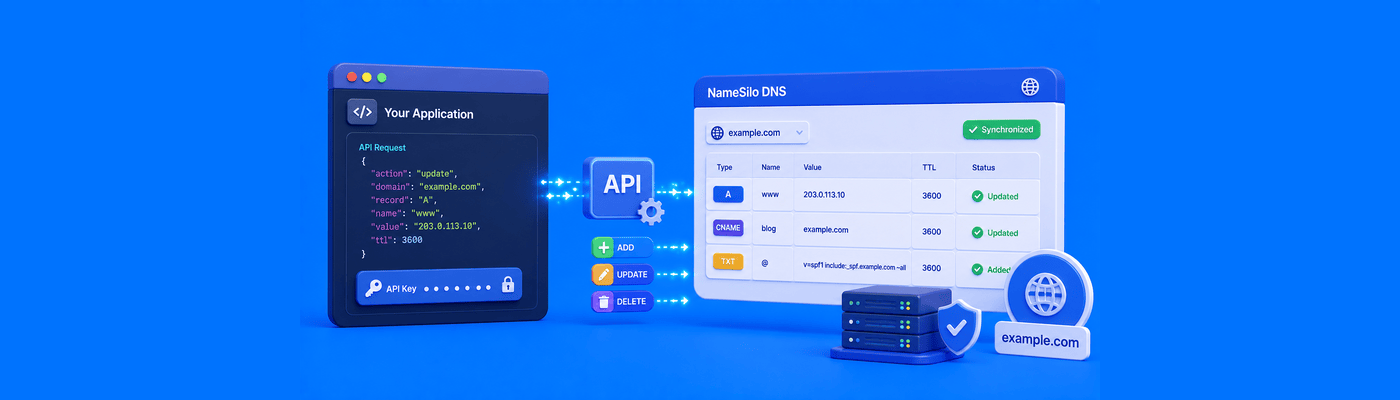
Illustration of programmatically adding and updating DNS records using the NameSilo API.
DNS

Updating DNS Records Programmatically via the NameSilo API

Automate DNS management with NameSilo's API using dnsListRecords, dnsAddRecord, dnsUpdateRecord, and dnsDeleteRecord. Always call dnsListRecords first to retrieve the record_id before updating or deleting; note it's passed back as rrid in update and delete calls. Useful for DDNS and Let's Encrypt wildcard verification.
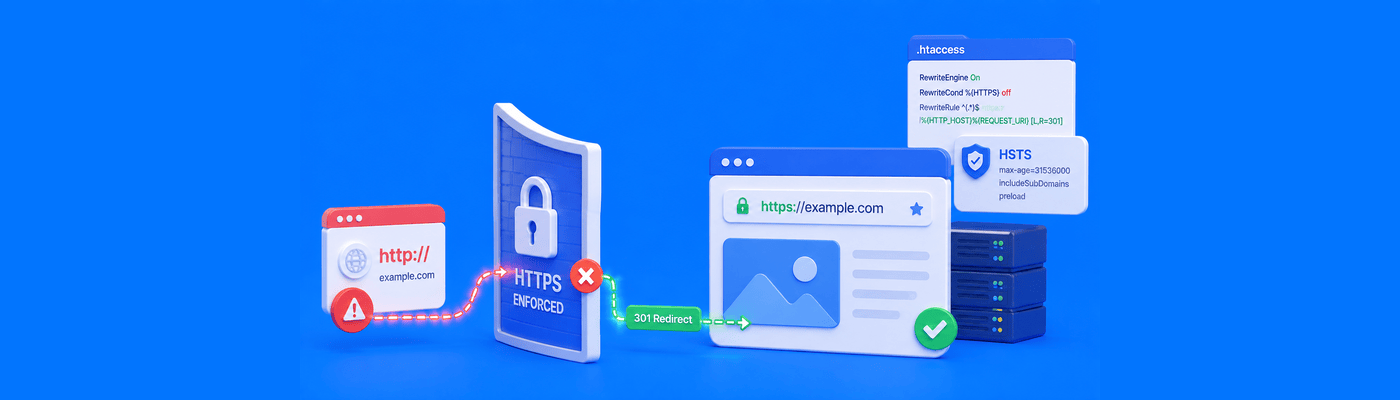

Illustration of HSTS forcing a website to use secure HTTPS connections and blocking insecure HTTP access.
Websites & Hosting

How to Fix the "508 Resource Limit Is Reached" Error

A 508 error means the server's resource isolation system throttled your account after hitting its CPU, memory, or Entry Process limit, not a server crash. Check cPanel Resource Usage to identify which specific limit was hit before making changes. Unlimited bandwidth does not prevent this error; CPU and bandwidth are separate resources.

Illustration of HSTS forcing a website to use secure HTTPS connections and blocking insecure HTTP access.
Websites & Hosting

How to Implement HSTS (HTTP Strict Transport Security)

Add Strict-Transport-Security: max-age=31536000; includeSubDomains; preload to .htaccess to force HTTPS-only connections and close the first-hop vulnerability standard redirects leave open. Warning: a long max-age combined with an expired SSL certificate hard-locks visitors out with no override for up to a year.

Illustration of restoring a MySQL database from an SQL backup using cPanel or phpMyAdmin.
Websites & Hosting

How to Restore a MySQL Database from a cPanel Backup

Restore a MySQL database via cPanel's Backup tool, or manually through phpMyAdmin: select the database, drop existing tables first, then import your .sql file. Skipping the drop step causes a "Table already exists" error. Files over ~50MB need SSH import instead of the browser upload.

Illustration of DMARC p=none monitoring email authentication failures and collecting reports while allowing messages to continue to the recipient's inbox.
Privacy & Security

What Does DMARC p=none Mean? (Monitoring Mode)

DMARC p=none is a monitoring-only mode: failed mail still delivers, and aggregate reports are collected instead. It provides zero protection against spoofing on its own. Best practice is a minimum 90-day monitoring period before advancing to p=quarantine. Never leave DMARC on p=none permanently.

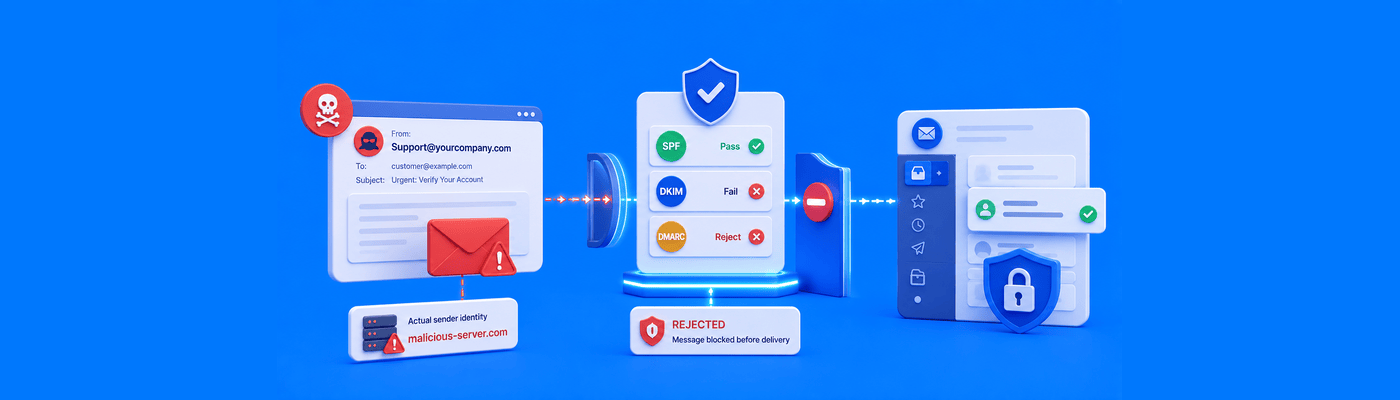
Illustration of SPF, DKIM, and DMARC authentication detecting and blocking a spoofed email before it reaches the recipient's inbox.
Privacy & Security

What is Email Spoofing and How Do You Stop It?

Email spoofing forges the visible "From" letterhead while SPF only checks the hidden envelope address, which is why SPF alone can't stop it. DMARC at p=reject closes this gap by requiring alignment between the two. BEC caused $3.05 billion in losses in 2025 per FBI IC3. Catch-all addresses increase spoofing-related risk.

Illustration of increasing the PHP maximum file upload size using cPanel MultiPHP INI Editor to allow larger website and WordPress uploads.
Websites & Hosting

How to Change Your Maximum File Upload Size (php.ini)

Increase WordPress upload limits via cPanel's MultiPHP INI Editor: raise upload_max_filesize, then post_max_size to an equal or greater value, then memory_limit to match. Skipping post_max_size is the most common cause of silent upload failures and the "link you followed has expired" error.

Illustration of NameSilo Domain Defender blocking unauthorized domain transfers and account changes with an additional security verification layer.
Privacy & Security

Understanding NameSilo Domain Defender

NameSilo Domain Defender is a free security layer requiring up to 5 custom security questions before any domain-level change executes. Unlike 2FA, which secures login, Domain Defender secures the actions that happen after login, including transfers, unlocking, and WHOIS edits. Pair both for maximum protection.

Illustration of the NameSilo API automating domain registrations and DNS management with secure API authentication and IP whitelisting.
Domain Name Search

Automating Domain Registrations with the NameSilo API

Automate domain registration and DNS management via NameSilo's API using simple GET requests. Secure your integration with IP whitelisting (up to 5 IPs) in API Manager, and never expose your key in public repositories or client-side code. Full reference and sandbox testing available.

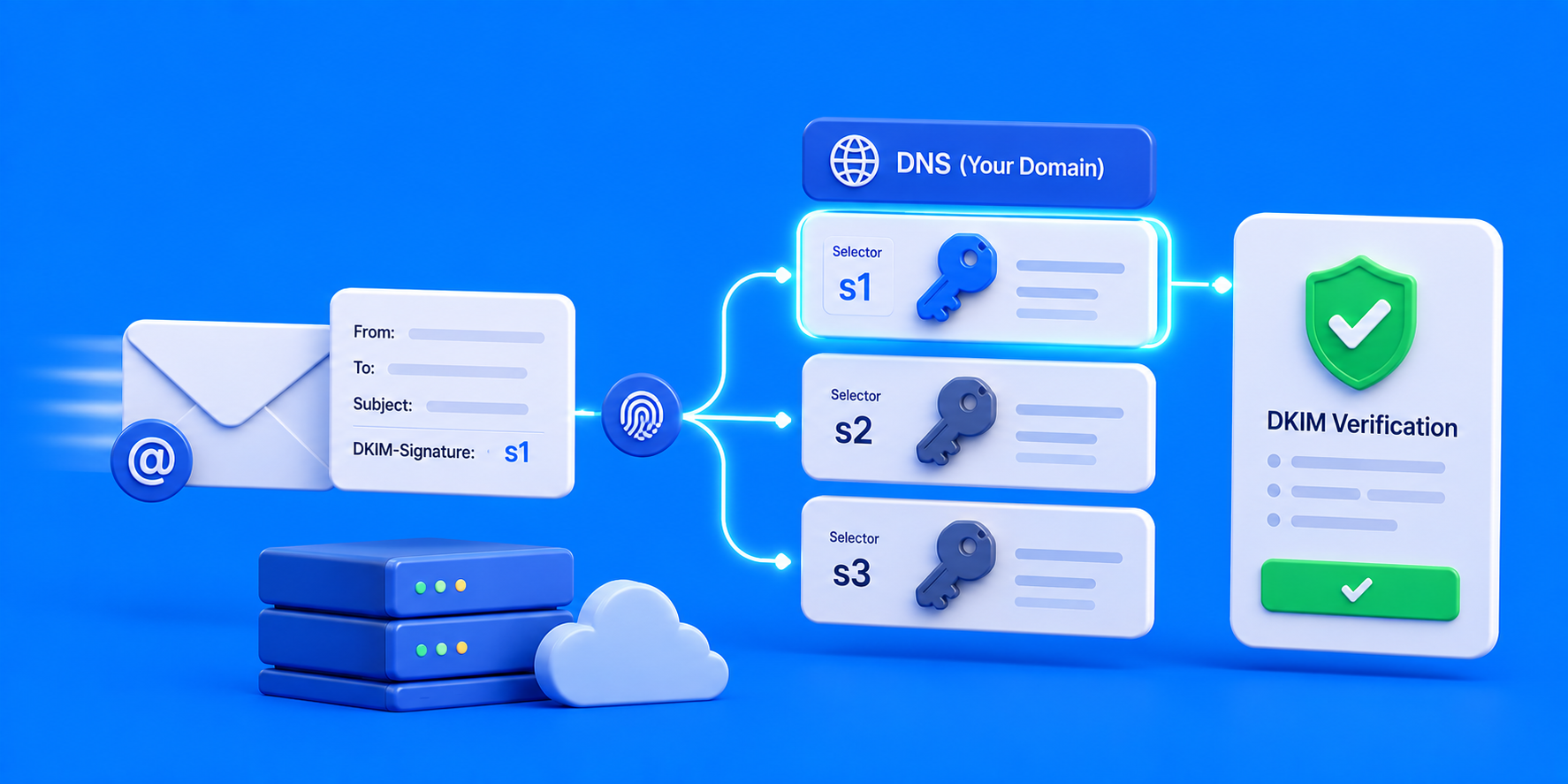
Illustration of a DKIM selector identifying the correct public key in DNS to authenticate an outgoing email.
DNS

What is a DKIM Selector and How Do You Find It?

A DKIM selector identifies which public key to check in DNS, following the format selector._domainkey.yourdomain.com. Find it in your provider's admin console (Google Workspace defaults to "google"; Titan Mail shows it under Email Reputation) or by inspecting the s= tag in a raw email header.

Illustration of generating an SSL Certificate Signing Request in cPanel, with the CSR sent to a Certificate Authority while the matching private key remains secured on the web server.
Websites & Hosting

How to Generate a CSR (Certificate Signing Request)

Generate a CSR in cPanel: Security → SSL/TLS → Private Keys (2048-bit) → Certificate Signing Requests → fill in domain, company, and location fields. Copy the full BEGIN/END CERTIFICATE REQUEST block. Back up the private key immediately; losing it makes the issued certificate unusable.

Illustration of two-factor authentication protecting a domain portfolio with a time-based authenticator code and security shield blocking unauthorized access.
Privacy & Security

Securing Your Domain Portfolio with Two-Factor Authentication

Enable app-based TOTP 2FA to protect your domain portfolio; never use SMS, which is vulnerable to SIM-swapping, the primary method used in high-value domain theft. NameSilo offers free, app-only 2FA and recommends Authy for its secure backup. Pair with Domain Defender for domain-level change protection.

FROM IDEA TO REALITY

You’ve got the idea.
Give it a name.

Find a domain that feels like you. Build what comes next.