
DNS5 min
Reputation Is Infrastructure: How Your DNS Records Signal Trust to AI Systems
NS
NameSilo Staff7/18/2025
Share
Trust in the Age of Machine-Readable Web
In the early days of the internet, DNS records were purely technical mechanisms for resolving domain names into IP addresses. Today, they’re becoming something else entirely: a foundation of machine-readable trust. As AI systems take the lead in search ranking, fraud detection, email filtering, and cyber defense, DNS records are no longer just passive infrastructure. They’ve become signals, active components of a domain’s reputation.
Search engines, mail services, and security algorithms now routinely analyze your DNS setup to make decisions: Is this website trustworthy? Is this sender legit? Should this content be indexed, flagged, or blocked? In a digital world increasingly governed by AI logic, your DNS configuration is part of your brand’s infrastructure-level reputation.
The Evolution of DNS: From Resolution to Reputation
DNS (Domain Name System) was designed as the phonebook of the Internet. But modern use cases have extended far beyond basic A records. With security, verification, and authenticity becoming crucial to digital communication, DNS has evolved into a reputation layer for:
- Email validation (SPF, DKIM, DMARC)
- Domain authenticity (DNSSEC)
- Service verification (TXT records for Google, Microsoft, etc.)
- User trust assurance (CNAME for branded services, HTTPS enforcement)
This evolution is key to understanding why AI systems increasingly treat DNS records as a form of machine-readable trustworthiness.
Why AI Systems Care About DNS
Search algorithms, spam filters, and fraud detection platforms are powered by AI that thrives on structured, consistent, and transparent data. DNS offers all three:
- Structured: DNS records follow predictable formatting.
- Decentralized: Each domain controls its own DNS, making tampering detectable.
- Observable: DNS can be queried, monitored, and scored in real time.
For AI systems, this makes DNS the perfect trust anchor, reliable, public, and hard to fake at scale.
Key DNS Records That Influence Trust
1. SPF (Sender Policy Framework)
Specifies which IP addresses or mail servers are authorized to send email on behalf of your domain. AI spam filters rely on this to prevent spoofing and phishing.
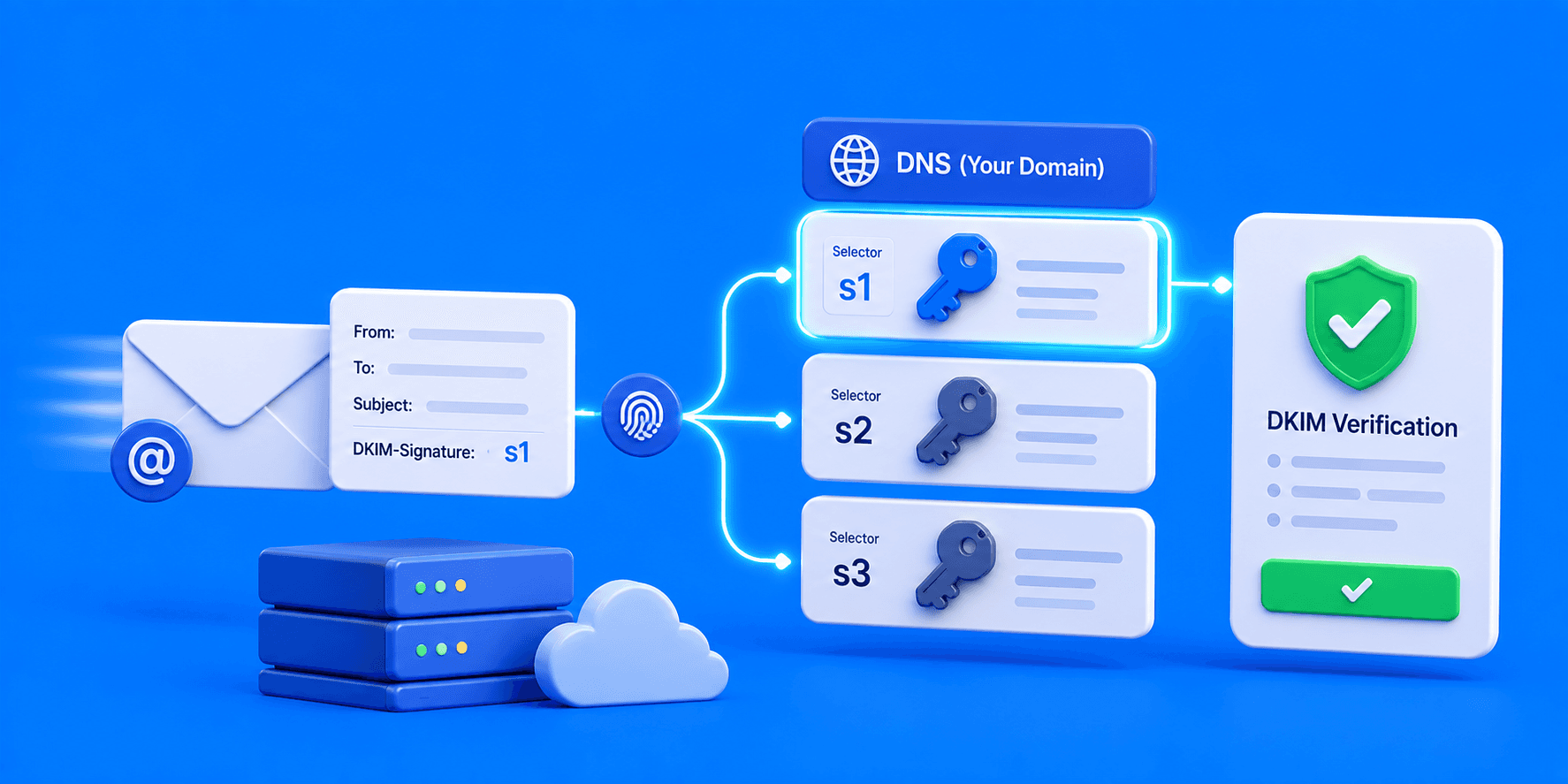
2. DKIM (DomainKeys Identified Mail)
Encrypts and signs outbound email headers. This allows receiving servers to verify the authenticity of a message using public keys published in DNS.
3. DMARC (Domain-based Message Authentication, Reporting & Conformance)
Tells mail receivers what to do if SPF or DKIM fails, and provides reporting for domain owners. DMARC policies also factor into sender reputation scores.
4. DNSSEC (Domain Name System Security Extensions)
Protects against DNS spoofing and man-in-the-middle attacks by cryptographically signing DNS responses. AI systems view DNSSEC-enabled domains as more secure.
5. CAA (Certification Authority Authorization)
Prevents unauthorized SSL certificates from being issued for your domain. Trust signals increase when certificate issuance is tightly controlled.
6. TXT Records for Service Verification
Includes verification for Google Workspace, Microsoft 365, and other tools. AI systems use this to confirm domain ownership and service legitimacy.
How DNS Signals Are Used by AI-Driven Systems
Search Engines
- Reputation Modeling: Search engines use DNSSEC and SPF/DKIM/DMARC records to evaluate whether a domain is secure, legitimate, and compliant with modern best practices.
- Indexing Decisions: Domains without proper DNS configuration may be excluded from SERPs or face lower rankings.
Email Providers
- Spam Filtering AI: Google, Microsoft, and others use SPF, DKIM, and DMARC to assess sender trust. Domains without these records often end up in junk folders.
- Reputation Scoring: Misconfigured DNS records contribute to sender domain blacklisting, impacting email deliverability.
Cybersecurity Platforms
- Threat Intelligence: AI-based security systems track DNS changes, domain registrations, and resolution patterns to detect anomalies or potential abuse.
- Zero Trust Frameworks: DNS records help security engines determine if a domain or subdomain can be trusted within distributed networks.
Ad Networks and Affiliates
- Cloaking and Redirect Detection: DNS records are used to detect suspicious patterns (e.g., fast-flux, CNAME cloaking).
- Brand Trust Verification: Clean DNS records improve the chances of approval for ad campaigns or affiliate partnerships.
Case Example: A Misconfigured Domain vs. a Trusted Setup
Domain A: Poor DNS Hygiene
- No SPF/DKIM/DMARC
- Expired SSL cert
- Lacks DNSSEC
- Uses outdated CNAMEs to redirect through suspicious networks
Result:
- Emails go to spam
- AI flags it as a security risk
- Search visibility drops
- Reputation score deteriorates
Domain B: DNS Built for Trust
- SPF/DKIM/DMARC all properly configured
- DNSSEC enabled
- CAA record limiting certificate issuers
- TXT records verifying services like Google Workspace and Microsoft 365
Result:
- Passes spam filters
- Recognized as legitimate in search algorithms
- Improved ad performance and partner approval
- Bolstered infrastructure trust
Why This Matters for Startups and Small Businesses
In the past, you could focus on content and backlinks alone. Today, infrastructure matters just as much. AI doesn’t just read your blog posts; it scans your DNS zone.
- New domain? Trust is earned faster through correct DNS setup.
- Trying to rank? A clean DNS profile boosts credibility.
- Sending email campaigns? Deliverability depends on DNS records.
- Running ads? Approval and trust scores consider DNS-based integrity.
This is especially vital for domains in sensitive industries: finance, health, ecommerce, or SaaS.
The Future of DNS Reputation
AI will continue to evolve in its interpretation of domain trust. We’re heading toward:
- Reputation-as-a-Service (RaaS): Real-time DNS scoring for businesses and security platforms.
- Behavioral DNS analysis: AI will track how often DNS changes, what patterns emerge, and who controls the records.
- DNS-integrated identity frameworks: DNS will become part of digital identity protocols.
Whether you’re building a brand or defending one, your DNS setup speaks volumes. And increasingly, it’s not just humans who are listening—it’s algorithms.
Conclusion
Reputation used to be built on content, branding, and backlinks. While those elements still matter, today’s digital trust also runs through your infrastructure, and DNS is where that trust begins.
In a world shaped by AI decision-making, your DNS records act like credentials. They don’t just resolve traffic. They signal whether you’re legitimate, secure, and accountable.
If reputation is the new capital of the internet, then DNS is the ledger it’s written on.
DNS That Does More Than Point Traffic
When trust is machine-validated, your DNS records become part of your brand identity. At NameSilo, we make it simple to manage DNS with power, precision, and security. From SPF and DMARC to DNSSEC and real-time edits, our tools help your domain project the trust AI systems now demand. Don’t just host a domain—build infrastructure that earns confidence.
.png&w=2048&q=75)
NameSilo StaffThe NameSilo staff of writers worked together on this post. It was a combination of efforts from our passionate writers that produce content to educate and provide insights for all our readers.
More articleswritten by NameSilo
.png&w=3840&q=75)
.png&w=3840&q=75)